Purr-ound Sound™ (2026): A New Era in Feline Vibroacoustics
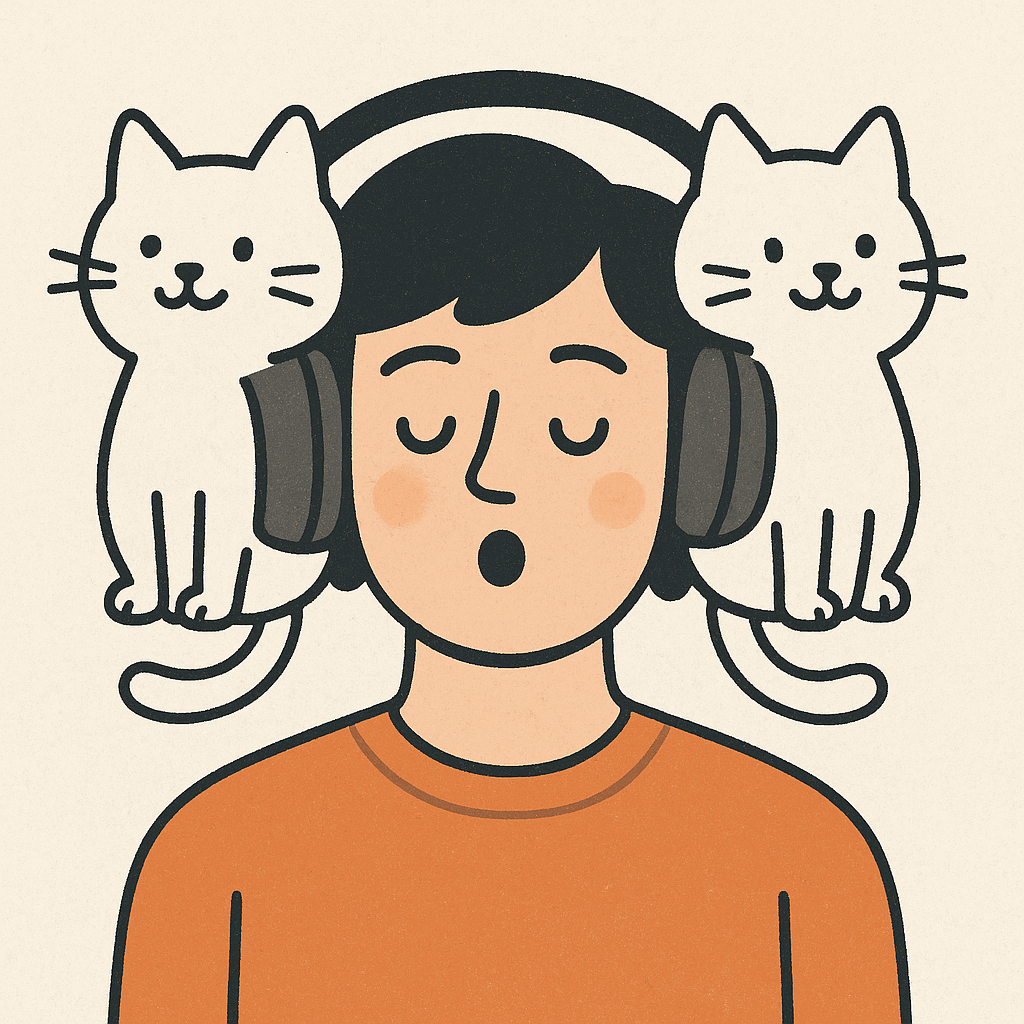
Feel the Purr
As acousticians, we spend a lot of time optimizing sound systems for human listeners.
Frequency response, spatial distribution, signal clarity—everything is tuned around what people are supposed to hear.
But there’s a stakeholder we’ve consistently overlooked.
Introducing: Purr-ound Sound™ (2026)
A fully integrated acoustic system built entirely from feline components.
Purr-ound Sound™ represents a paradigm shift in audio design, centering the acoustic preferences, behaviors, and operational constraints of domestic cats.
System Architecture
Subwoofer — Maine Coon
Broad low-frequency response with excellent coupling to soft surfaces. Performs best in lap-based installations.Tweeter — Siamese
High-frequency clarity with strong directional output. Occasional nonlinear events expected.Midrange — Domestic Shorthair
Balanced broadband response. Performance varies based on environmental conditions and mood.
Key Features
Active Pawssive Noise Cancellation™
Engages automatically during sleep states. Performance may degrade in the presence of vacuum cleaners.Autonomous Repositioning
Units dynamically relocate to optimize acoustic coverage and human inconvenience.Low-Frequency Therapeutic Output
Continuous purr resonance (~25 Hz) associated with relaxation and questionable productivity.Nighttime Calibration Cycles
Typically initiated between 2–4 a.m. System-wide synchronization not guaranteed.
Recent Research Developments
Recent work in feline vibroacoustics has introduced Meow-Weighted Decibels (dBmeow) as a standardized unit for evaluating feline-generated sound pressure levels.
Calibration is based on the canonical “3 a.m. closed-door meow,” with additional weighting applied for feeding chirps, existential yowls, and lap-contentment murmurs. Early findings suggest that certain vocalizations routinely exceed conventional annoyance thresholds, particularly when measured against human sleep cycles.
Performance Specifications (Selected)
Frequency Response: ~25–50 Hz (primary purr band), harmonics extending higher
Polar Pattern: Omnidirectional, with occasional head-tilt directivity
Power Source: Kibble + naps
Connectivity: Wireless (lap, chest, keyboard)
Extended use may result in spontaneous naps, increased attachment to system units, and a measurable decline in available workspace.
Operational Considerations
Purr-ound Sound™ systems require minimal user input but resist all attempts at manual control.
Units may enter “Zoom Mode™” without warning, particularly during late-night operation. Firmware updates are typically triggered by tuna-based inputs. Warranty coverage does not extend to sofas, keyboards, or other collateral damage.
Looking Ahead
Purr-ound Sound™ is the first in a series of products exploring the intersection of acoustics, perception, and system design.
Future releases will expand on adaptive feedback, user interaction, and the unintended consequences of optimization.
Technical Documentation
Brought to you by Resonance Corporation